Product Description
Product Overview
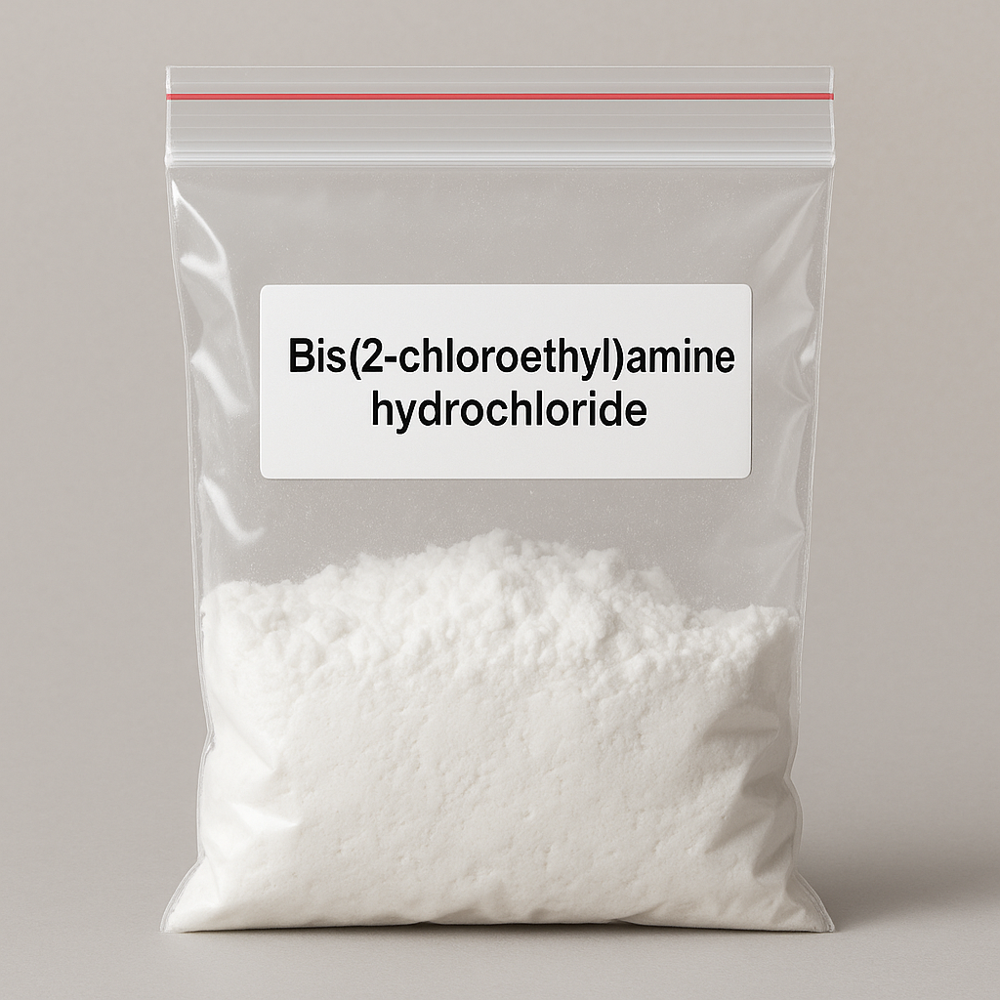
Bis(2-chloroethyl)amine hydrochloride is an important organic intermediate used in pharmaceutical synthesis, chemical research, polymer modification, and metal treatment processes. It is known for its alkylating properties and serves as a reactive building block in the production of advanced molecules.
Applications & Uses
Pharmaceutical Intermediates
-
Used in the synthesis of antineoplastic (anti-cancer) agents
-
Intermediate for DNA crosslinking agents
-
Precursor in alkylating drug development
Chemical Industry
-
Used in organic synthesis reactions
-
Alkylating reagent in heterocyclic compound formation
-
Intermediate for polyamine and epoxy resin curing agents
Research & Laboratory Use
-
Used in biochemical studies and DNA modification
-
Key reagent in biomedical and toxicology research
-
Employed in military chemical analysis (handled with permits only)
Safety Information
Handle with extreme care
-
Toxic by inhalation, ingestion, or skin contact
-
Use only in controlled industrial or laboratory environments
-
Mandatory PPE: gloves, goggles, lab coat, fume hood
-
Classified as a hazardous and controlled substance in some countries
-
MSDS available on request
Packaging
Applications in Pharmaceutical SynthesisBis(2-chloroethyl)amine hydrochloride is highly valuable in the pharmaceutical industry due to its role in synthesizing complex drug molecules. Its alkylating abilities are utilized to introduce functional groups essential for pharmacologically active compounds, making it a preferred reagent in advanced medicinal chemistry.
Versatility in Polymer and Metal IndustriesThis compound supports innovation in the polymer and metal industries by participating in polymer modification and metal treatment procedures. Its reactivity ensures compatibility with various processes, aiding in the development of specialized materials and enhanced industrial components.
FAQ's of Bis(2-chloroethyl)amine hydrochloride:
Q: How is Bis(2-chloroethyl)amine hydrochloride commonly used in the pharmaceutical sector?
A: In pharmaceuticals, Bis(2-chloroethyl)amine hydrochloride is primarily employed as an intermediate to construct complex molecular frameworks and introduce functional groups via alkylation, aiding in the development and production of advanced drug candidates.
Q: What benefits does Bis(2-chloroethyl)amine hydrochloride offer in polymer modification?
A: Its potent alkylating properties allow for the efficient incorporation of crosslinking or functional groups, improving polymer characteristics such as durability, flexibility, and chemical resistance for specialized industrial applications.
Q: Where can Bis(2-chloroethyl)amine hydrochloride be supplied or distributed in India?
A: The compound is available through specialized chemical distributors and suppliers across India, catering to research institutions, pharmaceutical manufacturers, and industrial users requiring high-purity intermediates.
Q: When is it appropriate to use Bis(2-chloroethyl)amine hydrochloride in chemical synthesis?
A: It is best used when a strong alkylating agent is needed to modify molecules, particularly in the synthesis of pharmaceuticals, during the formation of advanced intermediates, or when designing molecules with specific biological or chemical properties.
Q: What are the typical processes involving Bis(2-chloroethyl)amine hydrochloride in metal treatment?
A: It is utilized for surface modification, corrosion resistance, and as a functionalizing agent in metal treatment processes, enhancing metal properties or preparing surfaces for further processing or coating.
Q: How should Bis(2-chloroethyl)amine hydrochloride be handled during research applications?
A: Due to its reactive nature, this compound should be handled in a well-ventilated laboratory setting with appropriate personal protective equipment, strictly following safety protocols to prevent unintentional exposure or hazardous reactions.






 Send Inquiry